Il paradiso è lo stato di felicità suprema e definitiva. È piena comunione di vita e amore con Dio e tra i beati. È stare per sempre con Cristo, perfettamente incorporati in lui. È in Cristo che troviamo la nostra vera identità, quella di figli di Dio. È per mezzo della morte e risurrezione di Cristo che gli uomini hanno accesso al paradiso (Giovanni 14,2-3; 17,24). Nel paradiso i beati vedono Dio faccia a faccia così come Egli è (1Corinzi 13,12; 1Giovanni 3,2). Poiché la Scrittura parla di cose spirituali facendo uso di immagini, questo stato di suprema felicità e di perfetta comunione di vita e amore con Dio, viene presentato come giardino di Dio (Apocalisse 2,7), cielo (Filippesi 3,20), regno dei cieli (Matteo 8,11), casa del Padre (Giovanni 14,2), banchetto nuziale (Matteo 22,8), luce (1Timoteo 6,16), Gerusalemme celeste (Apocalisse 21,2.10). In paradiso l’uomo vi entra attraverso Cristo come per una porta (Giovanni 10,9), poiché solo attraverso Cristo e per mezzo del suo sacrificio (dagli effetti attivi e retroattivi) si trovano la salvezza e la vita eterna. Nel paradiso i beati regnano con Cristo (Apocalisse 22,5), continuando a servire Dio con gioia, e intercedendo per gli uomini ancora viatori sulla terra (Siracide 48,14; 2Maccabei 15,6-16), offrendo i meriti acquistati in terra mediante Gesù Cristo. Spesso ci riferiamo al paradiso come a un luogo, e il significato stesso di questa parola da l’idea di un luogo. Il Magistero, tuttavia, non ha mai dichiarato che il paradiso è un luogo. Entrare in paradiso significa vivere in Dio, il quale non può essere circoscritto a un luogo. Scrisse Dante nella sua Divina Commedia: “O Padre nostro, che ne’ cieli stai, non circunscritto, ma per più amore ch’ai” (Purgatorio, Canto XI). Il Catechismo, ad esempio, si riferisce al paradiso non come a un luogo, ma come a una comunione con Dio e con i beati (Catechismo 1024). In una sua udienza generale, l’allora Papa Giovanni Paolo II ha detto: “Il paradiso non è un luogo fisico tra le nubi, ma un rapporto vivo e personale con la Trinità Santa. È l’incontro con il Padre che si realizza in Cristo Risorto grazie alla comunione dello Spirito Santo.” (Udienza Generale, 21 Luglio 1999) È vero che Gesù e Maria si trovano in cielo coi loro corpi, e che alla resurrezione dai morti anche noi, se in questa vita abbiamo praticato l’amore e la giustizia verso Dio e verso il prossimo, verremo assunti al cielo, e cioè in paradiso, con i nostri corpi. Ma è altrettanto vero che, così come fu per Gesù e per sua madre, i nostri corpi verranno trasformati, secondo le parole dell’apostolo: “Si semina corruttibile e risorge incorruttibile; si semina ignobile e risorge glorioso, si semina debole e risorge pieno di forza; si semina un corpo animale, risorge un corpo spirituale.” (1Corinzi 15,42-44) E ancora: “Cristo trasfigurerà il nostro misero corpo per conformarlo al suo corpo glorioso, in virtù del potere che ha di sottomettere a sé tutte le cose.” (Filippesi 3,21) Questo nostro corpo risorgerà, ma sarà diverso nella gloria, poiché, come sta scritto: “La carne e il sangue non possono ereditare il regno di Dio.” (1Corinzi 15,50) Per “carne e sangue” s’intende questo corpo corruttibile. Quindi entreremo in paradiso con un corpo spirituale. Raccontando la sua visione del paradiso, suor Faustina Kowalska diceva: “Oggi in ispirito sono stata in paradiso e ho visto l’inconcepibile bellezza e felicità che ci attende dopo la morte. Ho visto come tutte le creature rendono incessantemente onore e gloria a Dio. Ho visto quanto è grande la felicità in Dio, che si riversa su tutte le creature, rendendole felici. Poi ogni gloria ed onore che ha reso felici le creature ritorna alla sorgente ed esse entrano nella profondità di Dio, contemplano la vita interiore di Dio, Padre e Figlio e Spirito Santo, che non riusciranno mai né a capire né a sviscerare. Questa sorgente di felicità è immutabile nella sua essenza, ma sempre nuova e scaturisce per la beatitudine di tutte le creature.” (Diario di Suor Faustina Kowalska, pagine 194-195)
THE HELL
The hell is essentially the condition of definitive self-exclusion from communion with God and with the blessed. The term “hell” is the translation of the Latin “infernus”, which corresponds to the Greek ᾅδης (transliterated: “hades”) and the Hebrew שָׁאוּל (transliterated: “sheol”), and means “that lies below”. It therefore indicates the stay of the dead, that is, the pit in which the corpses are buried (Psalms 6,6; Ecclesiastes 9,10). The term “hell” also has a spiritual meaning, and this is the use that Jesus makes of it when he speaks of the fate of the rich man: “One day the rich man died and was buried. He ended up in hell, where he was in torment.” (Luke 16:22-23) In the Bible we have two categories of “dead”: those according to the flesh, and those according to the spirit, that is, the lukewarm. The latter are those who are separated from communion with God (Revelation 3:16). An example of the distinction between these two categories of “dead” is found in Jesus’ words: “Let the dead bury their dead” (Matthew 8:22), where the first occurrence of “dead” is a reference to the lukewarm. One can be separated from communion with God already in this world, due to mortal sin. But it is in the other world that this separation can become definitive. In this sense, Jesus speaks of hell, that is, of the sojourn of those who are definitively separated from God. The New Testament writers indicate this condition by making use of the image of Gehenna (Matthew 10:28; Mark 9:43), of eternal fire (Matthew 18:8; 25:41; Jude 7), of darkness (Matthew 22:13; 25:30), of the fiery furnace (Matthew 13:49-50) and of the lake of fire and sulfur (Revelation 21:8). In one of his catecheses, the then Pope John Paul II taught that hell “indicates more than a place, the situation in which those who freely and definitively distance themselves from God, source of life and joy, find themselves.” (Catechesis of July 28, 1999) The image of eternal fire indicates unmitigated suffering, and the impossibility of this condition ceasing to exist.
L’INFERNO
A cura di Giuseppe Monno

L’inferno è la condizione di definitiva autoesclusione dalla comunione con Dio e con i beati. Non si tratta tanto di un “luogo fisico”, quanto di uno stato spirituale ed esistenziale di separazione eterna da Dio, fonte di vita, di amore e di felicità.
Etimologia e significato biblico
Il termine inferno deriva dal latino infernus, che significa “ciò che è in basso”, e traduce il greco hades e l’ebraico she’ol, termini che nella Bibbia indicano genericamente il soggiorno dei morti, il mondo sotterraneo. Nella concezione ebraica antica, lo she’ol era il luogo dove dimoravano indistintamente i defunti, senza ancora una distinzione tra giusti e malvagi (cfr. Salmi 88,4-6; Giobbe 7,9).
Con la progressiva rivelazione biblica, in particolare nei libri sapienziali e apocalittici (Sapienza 3,1-10; Daniele 12,2), emerge l’idea di una retribuzione ultraterrena: i giusti saranno accolti da Dio, mentre gli empi subiranno la condanna eterna.
Nel Nuovo Testamento, Gesù utilizza più volte la parola Geènna (dal termine ebraico Gehinnom, “valle di Hinnom”), una valle a sud di Gerusalemme dove, secondo la tradizione, venivano bruciate le immondizie e dove si era compiuto il culto idolatrico con sacrifici umani (2 Re 23,10; Geremia 7,31). Da qui il termine assunse un significato simbolico di luogo di perdizione e fuoco eterno.
Gesù ne parla in diversi contesti:
come pena eterna per chi rifiuta Dio (Matteo 5,22.29-30; 10,28; Marco 9,43-48);
come “fuoco inestinguibile” (Matteo 25,41) e “tenebre esteriori” (Matteo 22,13; 25,30);
come “stagno di fuoco e zolfo” (Apocalisse 21,8).
I morti secondo la carne e secondo lo spirito
Nella Scrittura si distinguono i morti secondo la carne, cioè coloro che hanno cessato di vivere fisicamente, e i morti secondo lo spirito, coloro che, pur vivi biologicamente, sono separati da Dio a causa del peccato (cfr. Efesini 2,1).
Gesù allude a questa distinzione quando dice:
“Lascia che i morti seppelliscano i loro morti” (Matteo 8,22), intendendo con la prima occorrenza “i morti spiritualmente”, cioè coloro che non vivono nella grazia di Dio.
Questa morte spirituale può essere temporanea, ma diventa eterna quando, al momento della morte fisica, l’anima si trova in stato di peccato mortale.
La natura dell’inferno
L’inferno è l’irreversibile rifiuto di Dio da parte della creatura libera. Come insegna Papa Giovanni Paolo II nella catechesi del 28 luglio 1999:
“Più che un luogo, l’inferno indica la situazione in cui viene a trovarsi chi liberamente e definitivamente si allontana da Dio, sorgente di vita e di gioia.”
La pena principale dei dannati è la “pena del danno”, cioè la privazione della visione beatifica di Dio, che costituisce la felicità suprema dell’uomo. A questa si aggiunge la “pena del senso”, che indica le sofferenze spirituali e, secondo il linguaggio simbolico della Scrittura, anche fisiche (fuoco, tenebre, pianto e stridore di denti).
Queste pene sono eterne, non per un difetto nella misericordia divina, ma perché la libertà dell’uomo diventa irrevocabile dopo la morte. Dio offre la grazia fino all’ultimo istante (1 Timoteo 2,4), ma la morte fissa per sempre la condizione dell’anima: chi entra nell’eternità senza la comunione con Dio rimane eternamente separato da Lui.
Testimonianza dei Padri della Chiesa
I Padri della Chiesa insistono sull’aspetto morale e spirituale dell’inferno.
Sant’Agostino (De Civitate Dei, XXI, 17) insegna che “la pena dei dannati non ha fine, come non ha fine la beatitudine dei giusti”.
Riferendosi alla pena dei dannati, San Giovanni Crisostomo afferma che “essere esclusi dalla gloria di Dio è un supplizio più terribile di ogni tormento” (Omelia su 2 Tessalonicesi 3).
Parlando dell’inferno, San Gregorio di Nissa afferma che “il fuoco eterno non è una realtà materiale, ma la pena di chi, dopo aver conosciuto la verità, si trova lontano dal bene”, e anche che “il castigo non viene da Dio, ma dal rifiuto stesso del bene: l’anima, che si è separata dalla purezza, soffre come per un fuoco che la purifica” (De anima et resurrectione).
Origene, invece, ipotizzò una forma di apocatastasi, cioè la restaurazione finale di tutte le creature, ma questa idea fu condannata come contraria alla fede dal Concilio di Costantinopoli II (553).
Definizione dogmatica e dottrina cattolica
Per la Chiesa cattolica, l’esistenza dell’inferno e la sua eternità costituiscono una verità di fede definita. Papa Benedetto XII, con la costituzione apostolica Benedictus Deus del 29 gennaio 1336, definì dogmaticamente che:
“Le anime di coloro che muoiono in peccato mortale attuale discendono subito all’inferno, dove sono tormentate con pene eterne.”
Il Catechismo della Chiesa Cattolica (nn. 1033-1037) ribadisce questa verità, sottolineando tuttavia che Dio “non predestina nessuno all’inferno” e che “perché ciò avvenga è necessario un atto di volontaria avversione da Dio, cioè un peccato mortale, e la persistenza in esso fino alla fine”.
Dimensione spirituale e pastorale
Il messaggio evangelico sull’inferno non mira a generare paura, ma a suscitare responsabilità e conversione. Gesù ammonisce:
“Entrate per la porta stretta, perché larga è la via che conduce alla perdizione e molti sono quelli che vi entrano” (Matteo 7,13-14).
L’annuncio dell’inferno è, dunque, un invito alla libertà autentica, alla scelta del bene e alla comunione con Dio, che solo può colmare il desiderio di felicità inscritto nel cuore umano.
QUESTIONS AND ANSWERS ON LUCA 23:43: TODAY YOU WILL BE WITH ME IN PARADISE
Luke 23:43
Jesus answered him, “Truly I tell you, today you will be with me in paradise.”
If Jesus rose on the third day, and ascended to the Father after forty days, how could he keep that promise?
Jesus is a Person of the divine Trinity, therefore one God with the Father (John 10:30; 16:15) and with his Holy Spirit (Acts 16:6-7; Romans 8:9; Galatians 4:6; 1 Peter 1:10-11). When the fullness of time came, the divine Second Person of the Trinity (Matthew 28:19) hypostatically united to himself a flesh animated by a rational soul, and became man (John 1:14; Galatians 4:4; Philippians 2:6-8) remaining God (John 20:28; Acts 20:28; Colossians 2:9; Titus 2:13; 2 Peter 1:1). Hence in Jesus there are two natures, divine and human, without confusion or change or division or separation. Two natures, divine and human, but only one subject, the divine one. With his human nature Jesus died on the cross and rose on the third day (John 2:19.21.22), and after forty days he ascended to the Father (John 20:17; Acts 1:3). But as a Person of the divine Trinity, Jesus was already with the Father. Therefore Jesus was able to say to the repentant man: “Today you will be with me in paradise” (Luke 23:43), that is, with my divine and omnipresent Person, who, at the same time, is in paradise but also here next to you. Afterwards I will also take my human nature into paradise, that is, the body and soul which have become proper to the divine Second Person of the Holy Trinity. In fact, that day, while the Lord was in the tomb with his body, he descended with his soul into hell to free the souls of the righteous, as the prophets prophesied: “I will deliver this people from the power of the grave; I will redeem them from death. Where, O death, are your plagues? Where, O grave, is your destruction?” (Hosea 13:14) And also: “As for you, because of the blood of my covenant with you, I will free your prisoners from the waterless pit.” (Zechariah 9:11) And that man could see the glory of the Lord, in paradise, according to the promise that was made to him on the cross.
JESUS WAS NOT HANGED ON A POLE, BUT HE WAS CRUCIFIED ON A CROSS
According to the doctrine of Jehovah’s Witnesses, Christ was hung on a stake, not a cross. Already in the Greek koinè (the biblical one) the Greek word “σταυρός” (transliterated: “stauròs”) translates as “pole”, but also “cross”. The Gospels provide us with some elements that exclude that Christ was hung on a pole rather than a cross. First of all, the crucifixion was a sentence inflicted by the Romans on slaves, rebels and criminals. It was a shameful and cruel form of execution, and death came slowly, by suffocation. Christ was crucified by the Romans (Matthew 9:19; Mark 10:33; 15:1-25), on a cross, not on a stake. The condemned to death by crucifixion carried not the entire cross, but only the horizontal arm or wood, called the “patibulum”. Arriving at the place of execution, the patibulum was fixed on the upright wood, which in the New Testament is called “ξύλον” (transliterated: “xỳlon” [Acts 5:30; 10:39; 13:29; Galatians 3:13; 1 Peter 2:24]). The nails were driven into the forearms, between the ulna and the radius. Not in the hands, since the weight of the condemned man’s body would have caused the laceration of the hands, therefore the fall from the cross. On the cross, above the head of Jesus, they placed the written reason for his condemnation: “Jesus the Nazarene, the king of the Jews” (John 19:19). If he had been hung on a pole instead of a cross, that inscription would have been placed above his hands, not above his head. After his resurrection, when the other apostles said to Thomas: So the other disciples told him, “We have seen the Lord!” But he said to them, “Unless I see the nail marks in his hands and put my finger where the nails were, and put my hand into his side, I will not believe.” (John 20:25) Thomas speaks of the “the nail marks” in the hands of Jesus, not of “the nail one mark”. Therefore Jesus had to be not with his arms closed, above his head, with one hand on the other as in the pictures in the Watchtower, but rather with arms wide open, as in the pictures in the Catholic Church, with a nail driven into each hands. The Greek word used by John and translated as “hands” is “χεῖράς” (transliterated: “cheiras”), from “χεὶρ” (transliterated: “cheir”), which indicates not only the hand, but also the whole arm. The Jewish writer Josephus (37-100 AD) writes that Jesus was “punished by the cross” (Jewish Antiquities XVIII, 63-64). Alessameno’s graffiti, dating from the middle of the third century, shows a crucifix with the head of a donkey, dressed in a short sleeveless tunic. It is seen from behind. To the left of the crucifix a man is depicted, also wearing a short sleeveless tunic. He has one arm raised. Between the man with the raised arm and the crucifix with the donkey’s head, there is a Greek inscription: “Αλεξαμενος σεβετε θεόν” (transliterated: “Alexamenos sebete theon”) which means: “Alexamenus worships his god”. a blasphemous representation of the crucifixion of Christ. In fact, according to what Tertullian (155-230 AD) stated, Christians were unjustly accused of worshiping a god with the head of an ass (Apologeticum XVI, 1-2). Christians mark their foreheads with a small sign of the cross (De Corona 3). This is why Jesus Christ was hung on a cross, not on a stake. His arms outstretched on the cross make us think of the love of God that embraces all men.
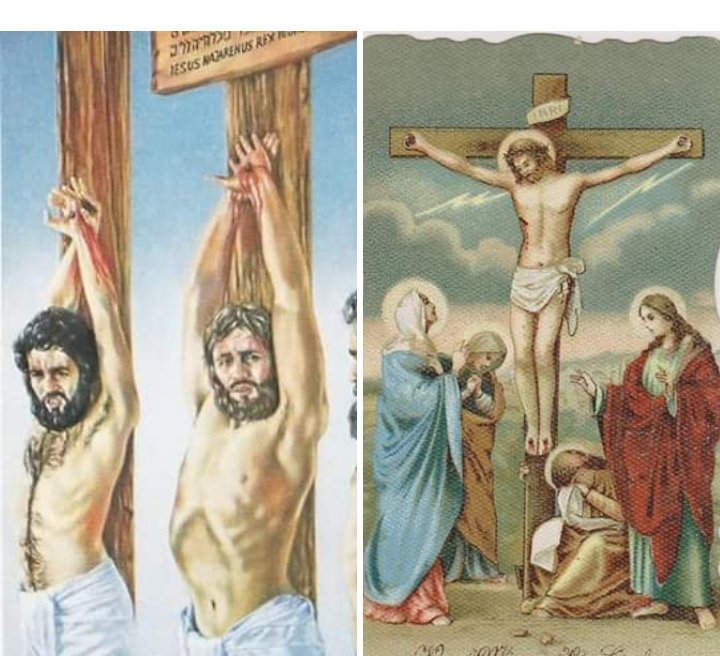
GESÙ CRISTO FU CROCIFISSO SU UNA CROCE, NON APPESO A UN PALO
A cura di Giuseppe Monno

Nel cuore del cristianesimo vi è la croce: non solo simbolo di sofferenza, ma anche di redenzione, di amore e di vittoria sulla morte. Tuttavia, alcuni gruppi religiosi – come i Testimoni di Geova – negano che Gesù sia stato crocifisso su una croce, sostenendo invece che sia stato appeso a un palo verticale. Tale posizione, oltre a contraddire la Tradizione apostolica, si scontra con le evidenze storiche, linguistiche, bibliche, archeologiche e teologiche.
È vero che il termine greco stauròs originariamente indicava un palo diritto, ma già nel I secolo il suo significato si era ampliato fino a includere anche la croce a due bracci. L’uso del vocabolo nei Vangeli e nella letteratura cristiana primitiva riflette questa evoluzione semantica.
La crocifissione era una forma di esecuzione usata dai Romani contro schiavi, ribelli e malfattori. Era una pena atroce e infamante, nella quale la morte avveniva lentamente, spesso per asfissia. I Vangeli attestano chiaramente che Gesù fu consegnato ai Romani e da loro crocifisso (cf. Matteo 27,26-35; Marco 15,1-25; Luca 23,26-33; Giovanni 19,16-18).
Il condannato non portava l’intera croce, ma solo il patibulum (l’asse orizzontale), che veniva fissato allo stipes, il palo già infisso nel terreno. Gesù portò questo patibulum fino al Golgota, dove fu crocifisso con le braccia distese.
Un dettaglio decisivo si trova nel Vangelo di Giovanni. Dopo la risurrezione, l’apostolo Tommaso esclama: «Se non vedo nelle sue mani il segno dei chiodi, e non metto il dito nel posto dei chiodi e non metto la mia mano nel suo costato, non crederò!» (Giovanni 20,25)
Il testo greco impiega il plurale ton hēlōn (dei chiodi), indicando che almeno due chiodi furono utilizzati per le mani (o polsi), e quindi che le braccia erano distese, non sovrapposte come nel caso di una semplice impalazione verticale. Inoltre, il termine greco cheiras (mani) può includere anche il polso, dove i chiodi venivano infissi tra ulna e radio per sostenere il peso del corpo.
Marco scrive: «L’iscrizione con il motivo della sua condanna diceva: “Il re dei Giudei”» (Marco 15,26). L’evangelista precisa che l’iscrizione era posta sopra il capo di Gesù, confermando l’orientamento orizzontale delle braccia: se fosse stato appeso a un palo, il cartello sarebbe stato sopra le mani, non sopra la testa.
Lo storico ebreo Giuseppe Flavio (37–100 d.C.) scrive che Gesù fu «punito da Ponzio Pilato con la crocifissione» (Antichità giudaiche, XVIII, 63–64). Questo conferma la modalità romana dell’esecuzione.
Anche il celebre graffito di Alessameno, risalente al II o III secolo e scoperto sul Palatino a Roma, mostra una figura umana crocifissa con testa d’asino: una chiara satira anticristiana. L’iscrizione «Alexamenos sebete theon» (Alessameno adora il suo dio) deride un cristiano in preghiera davanti a una figura su una croce a due bracci. Se anche i nemici del cristianesimo già riconoscevano la croce, ciò rafforza l’evidenza della sua storicità.
Alcuni autori pagani accusarono i cristiani di adorare un dio con testa d’asino. Tertulliano, nel Apologeticum (XVI, 12), e Minucio Felice, nel Octavius (§ 9), respinsero con fermezza queste accuse infamanti. Ma indirettamente, queste calunnie confermano che già nel II secolo i cristiani erano identificati come adoratori di un crocifisso – rappresentato su una vera croce.
L’idea che Gesù sia stato inchiodato a un semplice palo verticale è una dottrina moderna, sviluppata nel XX secolo, priva di fondamento nella Scrittura, nei testi patristici, nei dati storici e nella prassi romana. Al contrario, tutte le fonti – bibliche, storiche, archeologiche e teologiche – convergono nell’affermare che Gesù fu crocifisso su una croce, con le braccia distese e i chiodi infissi nei polsi.
Come scrive San Paolo:
«Quanto a me, non ci sia altro vanto che nella croce del Signore nostro Gesù Cristo.» (Galati 6,14)
Le braccia spalancate di Cristo sulla croce restano per sempre il segno visibile dell’abbraccio di Dio all’umanità.
QUESTIONS AND ANSWERS ON MATTHEW 23:9-10: IF THE PRIESTS CAN BE CALLED “FATHER”
Matthew 23:9-10
Do not call anyone on earth your father; for One is your Father, He who is in heaven. And do not be called teachers; for One is your Teacher, the Christ.
So we Catholics go against God’s will when we call priests and bishops “father”?
According to the above alone, when we Catholics call priests and bishops “father”, we do the opposite of what Christ commanded. It even seems that Christ abolished the commandment that says to honor parents (Exodus 20:12; Deuteronomy 5:16) by prohibiting the use of the appellative father. Yet, reading the New Testament, it seems that the disciples did not put this prohibition into practice. In fact, in his letters Paul writes: “Even if you had ten thousand guardians in Christ, you do not have many fathers, for in Christ Jesus I became your father through the gospel.” (1 Corinthians 4:15) “My dear children, for whom I am again in the pains of childbirth until Christ is formed in you.” (Galatians 4:19) “So Christ himself gave the apostles, the prophets, the evangelists, the pastors and teachers.” (Ephesians 4:11) Paul considers himself the “father” of those Christian communities, in a spiritual sense, and even says that Christ himself established some as pastors and teachers. It’s still: “And he is then also the father of the circumcised who not only are circumcised but who also follow in the footsteps of the faith that our father Abraham had before he was circumcised.” (Romans 4:12) “Not only that, but Rebekah’s children were conceived at the same time by our father Isaac.” (Romans 9:10) Here Paul mentions the two patriarchs Abraham and Isaac always using the appellative father. Let us see what John writes: “My dear children, I write this to you so that you will not sin. But if anybody does sin, we have an advocate with the Father—Jesus Christ, the Righteous One.” (1 John 2:1) Even John like Paul considers himself “father” in the spiritual sense of the Christian communities to which his letter is addressed. In Luke’s writings we read: “To this he replied: “Brothers and fathers, listen to me! The God of glory appeared to our father Abraham while he was still in Mesopotamia, before he lived in Harran.” (Acts 7:2) Stephen, inspired by the Spirit of God (Acts 6:10), called his compatriots “brothers” and “fathers”. In his letter James writes: “Was not our father Abraham considered righteous for what he did when he offered his son Isaac on the altar?” (James 2:21) While the author of the letter to the Hebrews: “In fact, though by this time you ought to be teachers, you need someone to teach you the elementary truths of God’s word all over again. You need milk, not solid food!” (Hebrews 5:12) Returning to the account of Matthew 23, if we read the entire chapter we understand how Jesus was giving a lesson to the hypocritical scribes and Pharisees. Those scribes and Pharisees did not generate divine life in the hearts of believers (Matthew 23:13-15), but instead tied heavy burdens and placed them on the shoulders of the people, but they did not even want to move them with a finger, and all their works they do to be admired by men (Matthew 23:4-5). They loved the places of honor in the banquets, the first seats in the synagogues and the greetings in the squares, as well as being called “rabbi” by the people (Matthew 23:7), and they transgressed justice, mercy and fidelity (Matthew 23:23). On the contrary, priests generate divine life in the hearts of believers, through the word of God and the sacraments instituted by Christ. Therefore, calling men on earth “father” or “teacher” is not at all contrary to the Word of God. Christ, just as Christ did not abolish the commandment that says to honor parents, neither did He forbid the use of the title father towards priests and bishops.
CHIAMARE “PADRE” I SACERDOTI NON È CONTRARIO ALLA PAROLA DI DIO
A cura di Giuseppe Monno

Nel Vangelo di Matteo leggiamo:
«E non chiamate nessuno “padre” sulla terra, perché uno solo è il Padre vostro, quello del cielo. E non fatevi chiamare “maestri”, perché uno solo è il vostro Maestro, il Cristo.» (Matteo 23,9-10)
A prima vista queste parole potrebbero sembrare in contrasto con l’uso cattolico di chiamare “padre” i sacerdoti o “maestro” gli insegnanti. Alcuni potrebbero perfino pensare che Gesù abbia abolito il comandamento dell’onorare i genitori (Esodo 20,12; Deuteronomio 5,16).
Tuttavia, un’analisi attenta del Nuovo Testamento e del contesto ci mostra chiaramente che non si tratta di un divieto assoluto all’uso di questi titoli, ma di una condanna degli atteggiamenti ipocriti e autoreferenziali dei farisei.
Nei suoi scritti, San Paolo utilizza frequentemente il linguaggio di paternità spirituale:
«Potreste avere diecimila pedagoghi in Cristo, ma non certo molti padri, perché sono io che vi ho generati in Cristo Gesù mediante il Vangelo.» (1Corinzi 4,15)
«Figliuoli miei, che io di nuovo partorisco nel dolore finché non sia formato Cristo in voi.» (Galati 4,19)
Paolo, dunque, si considera padre spirituale delle comunità cristiane, proprio perché ha generato in loro la vita nuova in Cristo.
Inoltre, Paolo non ha esitato a chiamare “nostro padre” i patriarchi Abramo e Isacco (Romani 4,12; 9,10).
Allo stesso modo, San Giovanni si rivolge ai cristiani chiamandoli “figlioli miei” (1Giovanni 2,1), mostrando un atteggiamento paterno.
Negli Atti degli Apostoli, Stefano si rivolge ai giudei dicendo: «Fratelli e padri, ascoltate.» (Atti 7,2)
Giacomo ricorda che «Abramo, nostro padre, non fu forse giustificato per le opere?» (Giacomo 2,21)
L’autore della Lettera agli Ebrei sottolinea che, col tempo, i cristiani avrebbero dovuto essere diventati “maestri” (Ebrei 5,12).
San Paolo afferma che “Dio ha costituito nella Chiesa maestri” (1Corinzi 12,28).
È chiaro, quindi, che i discepoli non hanno interpretato le parole di Gesù come un divieto letterale all’uso dei titoli, ma come un monito contro l’abuso dei titoli per ricerca di onore umano.
Il capitolo 23 di Matteo è una dura requisitoria contro l’ipocrisia degli scribi e dei farisei. Essi «legano pesanti fardelli e li impongono sulle spalle della gente, ma loro non vogliono muoverli neppure con un dito» (Matteo 23,4). Cercano i posti d’onore e «amano i saluti nelle piazze e il farsi chiamare rabbì» (Matteo 23,7).
Gesù denuncia questa ricerca di gloria umana e ricorda che la vera autorità nella comunità cristiana non è dominio, ma servizio (cf. Matteo 23,11; Marco 10,42-45).
Pertanto, il senso autentico di Matteo 23,9-10 non è quello di vietare ogni uso del titolo “padre” o “maestro”, ma quello di evitare che questi titoli diventino strumenti di vanagloria, usurpando l’unica vera sorgente di paternità e sapienza: Dio Padre e Cristo Maestro.
Gesù non ha abolito né il comandamento di onorare i genitori, né l’uso dei titoli di “padre” e “maestro”. Ha piuttosto insegnato che ogni paternità e ogni insegnamento autentico provengono da Dio.
Per questo motivo, quando nella Chiesa chiamiamo “padre” un sacerdote, riconosciamo in lui non un usurpatore del posto di Dio, ma un segno sacramentale della paternità divina, colui che genera alla vita nuova mediante il Vangelo e i sacramenti.
Come dice san Paolo: «Vi esorto dunque: siate miei imitatori!» (1Corinzi 4,16). Così i presbiteri, chiamati “padri”, non si sostituiscono a Dio, ma conducono i fedeli al vero ed unico Padre, che è nei cieli.
Il problema che Gesù condanna non è il titolo, ma l’atteggiamento di chi si fa chiamare così per orgoglio o dominio. La paternità del sacerdote non è biologica né assoluta, ma di servizio e responsabilità spirituale.
BEFORE BECOMING SATAN, LUCIFER WAS A CHERUBY
From Sacred Scripture (Ezekiel 28:13-15) it seems that before turning against God and becoming Satan, which means “Adversary”, Lucifer was a cherub. According to Diogini, the cherubs are the intermediate order belonging to the first celestial hierarchy, subject only to the seraphim (The Celestial Hierarchy VI, II). However, the first name that was attributed to the prevaricating angel, Lucifer which means “Bearer of light”, indicated his being in charge of all the angelic hosts. It is in fact the higher angels who enlighten the lower angels regarding the divine mysteries. In his writings St. Thomas Aquinas explains that the term cherub means “fullness of science”, while the term seraph means “fiery”. It is therefore clear that the cherub indicates knowledge, which can be together with mortal sin, while the seraph indicates the intense warmth of charity, which is not compatible with mortal sin. Therefore Lucifer, despite being in charge of all the angelic hosts, was not called a seraph, but a cherub (Sum Theological I, q 63, a 7). The ministry of prince of all the celestial hosts was then entrusted to the archangel Michael, from the Hebrew מִיכָאֵל (transliterated: Mika’el), which means “Who is like God?”, Meaning that “no one is like God” (1 Samuel 2:2; Job 40:9; Isaiah 42:8; Psalms 35:10; 145:3; Micah 7:18). The archangel is in fact in charge of defending the dominion of the Almighty (Daniel 12:1). When Lucifer turned against God, Michael immediately opposed him and cast him out of heaven (Revelation 12:7-9; Luke 10:18). Lucifer comes from the Latin Lucifer, which translates the Hebrew הִילֵּל (transliterated: Helel) that we find in the passage from Isaiah 14:12-15, a satire that according to some theologians originally targeted a deceased Assyrian ruler, Sargon II. The fall from heaven of a morning star (Helel, from which Lucifer [Isaiah 14:12]) is interpreted by the patristic tradition as the fall of the prevaricating angel.
PRIMA DI DIVENTARE SATANA, LUCIFERO ERA UN CHERUBINO
Dalla Sacra Scrittura (Ezechiele 28,13-15) sembra che prima di volgersi contro Dio e diventare Satana, che significa “Avversario”, Lucifero fosse un cherubino. Secondo Diogini i cherubini sono l’ordine intermedio appartenente alla prima gerarchia celeste, sottoposti solo ai serafini (La Gerarchia Celeste VI, II). Tuttavia il primo nome che fu attribuito all’angelo prevaricatore, Lucifero che significa “Portatore di luce”, indicava il suo essere preposto a tutte le schiere angeliche. Sono infatti gli angeli superiori che illuminano gli angeli inferiori riguardo i misteri divini. Nei suoi scritti San Tommaso D’Aquino spiega che il termine cherubino significa “pienezza della scienza”, mentre il termine serafino significa “ardente”. È chiaro perciò che con cherubino si indica la conoscenza, la quale può stare insieme al peccato mortale, mentre con serafino si indica l’intenso calore della carità, la quale non è compatibile col peccato mortale. Perciò Lucifero, pur essendo preposto a tutte le schiere angeliche, non fu denominato serafino, ma cherubino (Somma Teologica I, q 63, a 7). Il ministero di principe di tutte le schiere celesti fu poi affidato all’arcangelo Michele, dall’ebraico מִיכָאֵל (traslitterato: Mika’el), che significa “Chi è come Dio?”, a significare che “nessuno è come Dio” (1Samuele 2,2; Giobbe 40,9; Isaia 42,8; Salmi 35,10; 145,3; Michea 7,18). L’arcangelo è infatti incaricato della difesa del dominio dell’Onnipotente (Daniele 12,1). Quando Lucifero si volse contro Dio, subito Michele si contrappose a lui e lo scacciò dal cielo (Apocalisse 12,7-9; Luca 10,18). Lucifero viene dal latino Lucifer, che traduce l’ebraico הִילֵּל (traslitterato: Helel) che troviamo nel brano di Isaia 14,12-15, una satira che secondo alcuni teologi originariamente aveva di mira un defunto sovrano Assiro, Sargon II. La caduta dal cielo di un astro del mattino (Helel, da cui Lucifero [Isaia 14,12]) viene interpretato dalla tradizione patristica come la caduta dell’angelo prevaricatore.
 Cristiani Cattolici Romani