John 8:58
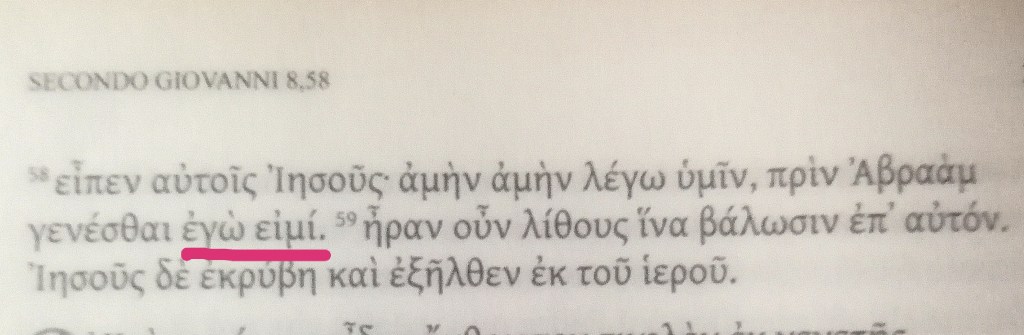
Eipen autois Iēsous: “Amēn amēn lēgo hymin, prin Abraam genesthai egō eimì.”
New World Translation
Jesus said to them: “Most truly I say to you, before Abraham came into existence, I have been.”
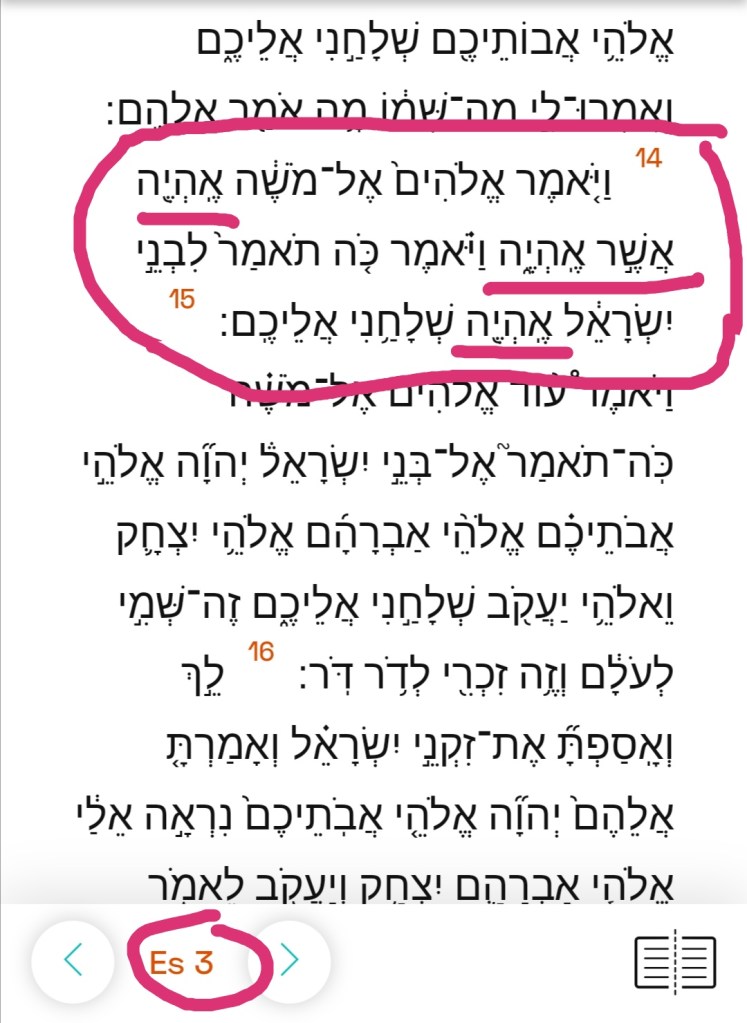
The anonymous authors of the New World Translation translate the Greek “egō eimì” as “I have been”. But “egō eimì” means “I am”. In all other verses where John’s Greek text reports “egō eimì,” the anonymous authors of the New World Translation correctly translate “I am” (John 6:48; 6:51; 8:12; 10:7.9; 14:6). The anonymous authors of the New World Translation incorrectly translate John 8:58 to hide the fact that Jesus claims to be the “I-AM”. In fact, with those words of his, Jesus recalls the words that the Lord said to Moses: אֶֽהְיֶ֖ה אֲשֶׁ֣ר אֶֽהְיֶ֑ה (transliterated into: ehyeh ʾašer ʾehyeh) which means: “I am who I am”. Then God added, “You will say to the Israelites: I Am (Hebrew: אֶֽהְיֶ֑ה, transliterated to: ehyeh) sent me to you.” (Exodus 3:14) The Greek “egō eimì” is the translation of the Hebrew “ehyeh”. The Jews had understood very well what Jesus meant, and therefore they wanted to stone him (John 8:59). Jewish law did not provide for the death by stoning of those who claimed to have existed in the past, as in the case of Jesus according to the New World Translation. The death sentence by stoning was carried out on adulterers (Leviticus 20:10), blasphemy (Leviticus 24:10-23), diviners (Leviticus 20:27), false prophets who incite apostasy and idolatry (Deuteronomy 13:5-10), and the rebellious sons (Deuteronomy 21:18-21). On that occasion the Jews wanted to stone Jesus for blasphemy, because they clearly understood that with that “I Am” Jesus claims to be YaHVeH. In fact on another occasion the Jews said to him: “For a good work we stone thee not; but for blasphemy; and because that thou, being a man, makest thyself God.” (John 10:33) On that occasion Jesus said: “I and my Father are One.” (John 10:30)
I quote the names of some international translations, different from that of the New World Translation, and in which the Greek “egō eimì” in John 8:58 is correctly translated as “I am”
English Standard Version, Berean Study Bible, Berean Literal Bible, King James Bible, New King James Version, New American Standard Bible, NASB 1995, NASB 1977, Amplified Bible, Christian Standard Bible, Holman Christian Standard Bible, American Standard Version, Douay-Rheims Bible, International Standard Version, Literal Standard Version, New American Bible, NET Bible, New Revised Standard Version, New Heart English Bible, World English Bible, Young’s Literal Translation, Vulgata, Martini, Interconfessionale, CEI, Riveduta, Nuova Riveduta, Diodati, Nuova Diodati, Bibbia della Gioia, Louis Segond Bible, Martin Bible, Darby Bible, LBLA, JBS, NBLA, Lutherbibel 1912, Lutherbibel 1984, Textbibel 1899, Modernisiert Text.
I conclude with these strong words of Jesus: “I have told you that you will die in your sins; for if you do not believe that I Am, you will die in your sins.” (John 8:24)
In the photo n. 1: the Greek text of John 8,58: ἐγὼ εἰμί (egō eimì)

In the photo n. 2: the Masoretic Hebrew text of Exodus 3:14: אֶֽהְיֶ֖ה אֲשֶׁ֣ר אֶֽהְיֶ֑ה (ehyeh ʾašer ʾehyeh) and: אֶֽהְיֶ֑ה (ehyeh) / Hebrew is read from right to left
 Cristiani Cattolici Romani